Ivermectin Uses: Complete Guide to Medical Applications and Treatments
2026-01-17
•Dr. Sarah Chen, MD
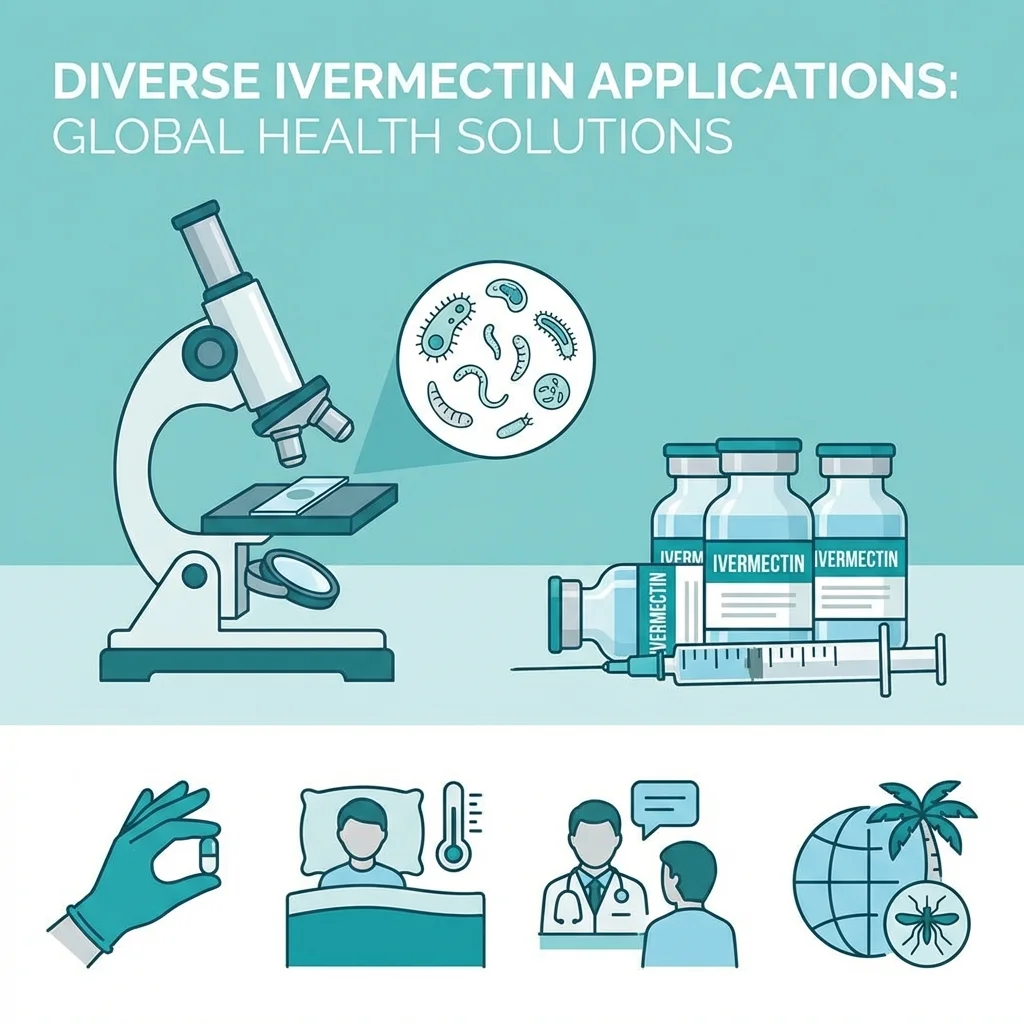
Ivermectin is a versatile antiparasitic medication with multiple FDA-approved and off-label uses. This comprehensive guide explores all current medical applications, helping you understand when and how ivermectin is appropriately used.
Quick Overview
FDA-Approved Uses:
- Intestinal strongyloidiasis
- Onchocerciasis (river blindness)
- Head lice (topical)
- Rosacea (topical)
Common Off-Label Uses:
- Scabies
- Cutaneous larva migrans
- Lymphatic filariasis
Read our comprehensive ivermectin guide for more details on safety and dosing.
FDA-Approved Medical Uses
Intestinal Strongyloidiasis
Strongyloidiasis is a parasitic infection caused by the roundworm Strongyloides stercoralis. Ivermectin is the primary treatment.
Key Points:
- Dosage: 200 µg/kg as a single oral dose
- Effectiveness: Over 90% cure rate
- Follow-up: Stool examinations recommended 2-4 weeks post-treatment
- Special Cases: Immunocompromised patients may require repeated doses
Symptoms Treated:
- Abdominal pain and bloating
- Chronic diarrhea
- Skin manifestations (larva currens)
- Respiratory symptoms in disseminated cases
For detailed dosing information, see our ivermectin dosage guide.
Onchocerciasis (River Blindness)
Ivermectin revolutionized the treatment of river blindness, a disease that affects millions in Africa and Latin America.
Treatment Protocol:
- Dosage: 150 µg/kg annually
- Duration: May require multiple annual treatments
- Mechanism: Kills microfilariae (larval worms) but not adult worms
- Prevention: Mass drug administration programs in endemic areas
Impact:
- Prevents blindness and severe skin disease
- Has helped near-eliminate onchocerciasis in several countries
- Part of WHO's neglected tropical disease initiatives
Topical Applications
Head Lice (Sklice Lotion):
- Single application to dry hair
- Leave on for 10 minutes
- Effective against lice and eggs
- Approved for patients 6 months and older
Rosacea (Soolantra Cream):
- Once-daily application
- Reduces inflammatory lesions
- Mechanism: Anti-inflammatory and anti-Demodex mite effects
- Visible improvement typically within 2-4 weeks
Common Off-Label Uses
[!IMPORTANT] Off-label uses should only be pursued under medical supervision. Always consult a healthcare provider.
Scabies
While not FDA-approved for scabies in the US, ivermectin is widely used for this condition globally.
Usage:
- Oral Dosage: 200 µg/kg, may repeat after 1-2 weeks
- Alternative: Permethrin cream (recent 2026 research suggests may be more effective)
- Crusted Scabies: Higher doses and multiple treatments may be needed
Learn more about ivermectin side effects before starting treatment.
Cutaneous Larva Migrans
This skin infection from animal hookworms responds well to ivermectin.
Treatment:
- Single dose of 200 µg/kg
- Symptomatic improvement within 24-48 hours
- Alternative: Topical thiabendazole
Lymphatic Filariasis
Used as part of mass drug administration programs.
Protocol:
- Combined with albendazole or diethylcarbamazine
- Annual single-dose treatment
- Part of WHO elimination strategy
Emerging and Investigational Uses
Cancer Research
Recent studies have explored ivermectin's potential anticancer properties.
Current Status (2026):
- Preclinical: Shows promise in laboratory studies
- Clinical Trials: Phase I/II trial ongoing for triple-negative breast cancer
- Evidence: No proven clinical efficacy as cancer treatment yet
[!WARNING] Ivermectin is NOT approved for cancer treatment. Never substitute proven cancer therapies with ivermectin. See our detailed ivermectin for cancer research article for more information.
Malaria Control
The 2025 BOHEMIA trial showed promising results.
Findings:
- 26% reduction in malaria infections in children
- Used as complementary tool with standard interventions
- Particularly valuable given insecticide resistance
COVID-19 (Not Recommended)
Current Evidence:
- Not FDA-approved for COVID-19
- Multiple studies show no significant benefit for mortality or hospitalization
- Major health organizations recommend against its use
Veterinary Uses
Ivermectin is extensively used in animal medicine for:
- Heartworm prevention in dogs
- Parasite control in livestock
- Mange treatment in various species
[!CAUTION] NEVER use veterinary ivermectin formulations for humans. They are highly concentrated and may contain ingredients harmful to people.
When Ivermectin Is NOT Appropriate
Do not use ivermectin for:
- Viral infections (including COVID-19)
- Bacterial infections
- Fungal infections
- Cancer (except in approved clinical trials)
- Any non-parasitic condition
Medical Contraindications:
- Pregnancy (unless benefits outweigh risks)
- Loa loa infection (risk of encephalopathy)
- Severe liver disease (use with caution)
How to Use Ivermectin Properly
Before Taking Ivermectin
- Get Proper Diagnosis: Ensure you actually have a parasite infection
- Consult Healthcare Provider: Discuss your medical history
- Obtain Prescription: Never self-medicate
- Follow Instructions: Take exactly as prescribed
During Treatment
- Take on empty stomach with water (1 hour before or 2 hours after meals)
- Complete full course even if symptoms improve
- Avoid alcohol during treatment
- Monitor for side effects
For detailed administration instructions, visit our how to take ivermectin guide.
After Treatment
- Follow-up testing as recommended by your doctor
- Watch for recurrence of symptoms
- Report any adverse effects to your healthcare provider
Frequently Asked Questions
What parasites does ivermectin treat?
Ivermectin is effective against:
- Intestinal worms (strongyloides, some roundworms)
- Tissue worms (onchocerca)
- Ectoparasites (lice, scabies mites)
- Certain other nematodes
Can ivermectin be used preventatively?
In endemic areas, ivermectin is used in mass drug administration programs to prevent parasitic diseases. However, for individual use, it's typically only prescribed when infection is confirmed or highly suspected.
How long does ivermectin stay in your system?
Ivermectin has a half-life of approximately 18 hours, with most of the drug eliminated within 4-5 days. See our comprehensive guide for more details.
Is ivermectin available over-the-counter?
As of 2026, some US states allow OTC purchase, but the FDA strongly recommends obtaining it only through prescription to ensure appropriate use and dosing.
Related Resources
- Ivermectin Dosage Guide - Detailed dosing charts and guidelines
- Ivermectin Side Effects - Complete safety information
- Comprehensive Ivermectin Guide - Everything you need to know
Medical Disclaimer
[!CAUTION] This article is for informational purposes only. Ivermectin should only be used under medical supervision. Always consult your healthcare provider for diagnosis and treatment recommendations.
References
- FDA. (2024). Ivermectin Drug Approvals and Uses. U.S. Food and Drug Administration.
- WHO. (2026). Ivermectin in Neglected Tropical Diseases. World Health Organization.
- CDC. (2026). Parasitic Infections Treatment Guidelines. Centers for Disease Control.
- University of Oxford. (2025). BOHEMIA Trial: Ivermectin for Malaria Control.
- Drugs.com. (2026). Ivermectin Clinical Applications Review.
Last Updated: January 17, 2026
Author: Dr. Sarah Chen, MD - Board-certified Infectious Disease Specialist
Reviewed By: Medical Editorial Team