Ivermectin Dosage Guide for Humans: Complete Weight-Based Chart & Instructions
2026-01-17
•Dr. Sarah Chen, MD
Proper ivermectin dosing is critical for both effectiveness and safety. This comprehensive guide provides weight-based dosage charts and detailed administration instructions for all FDA-approved indications.
[!CAUTION] Medical Supervision Required: This guide is for educational purposes only. Always follow your healthcare provider's specific instructions. Never self-medicate with ivermectin.
Quick Dosage Overview
| Condition | Dosage | Frequency |
|---|---|---|
| Strongyloidiasis | 200 µg/kg | Single dose |
| Onchocerciasis | 150 µg/kg | Annually |
| Scabies | 200 µg/kg | Single dose, may repeat |
| Head Lice (topical) | Apply lotion | Single application |
For detailed medical uses, see our ivermectin uses guide.
Complete Weight-Based Dosage Charts

For Strongyloidiasis (200 µg/kg)
Ivermectin 3mg Tablets:
| Body Weight | Weight Range (lbs) | Dose | Number of 3mg Tablets |
|---|---|---|---|
| 15-24 kg | 33-53 lbs | 3 mg | 1 tablet |
| 25-35 kg | 55-77 lbs | 6 mg | 2 tablets |
| 36-50 kg | 79-110 lbs | 9 mg | 3 tablets |
| 51-65 kg | 112-143 lbs | 12 mg | 4 tablets |
| 66-79 kg | 145-174 lbs | 15 mg | 5 tablets |
| 80+ kg | 176+ lbs | Calculate* | See below |
*For weights greater than or equal to 80 kg, calculate: (weight in kg × 0.2 mg) = total dose
For Onchocerciasis (150 µg/kg)
Ivermectin 3mg Tablets:
| Body Weight | Weight Range (lbs) | Dose | Number of 3mg Tablets |
|---|---|---|---|
| 15-25 kg | 33-55 lbs | 3 mg | 1 tablet |
| 26-44 kg | 57-97 lbs | 6 mg | 2 tablets |
| 45-64 kg | 99-141 lbs | 9 mg | 3 tablets |
| 65-84 kg | 143-185 lbs | 12 mg | 4 tablets |
| 85+ kg | 187+ lbs | Calculate* | See below |
*For weights greater than or equal to 85 kg, calculate: (weight in kg × 0.15 mg) = total dose
Dosage Calculator Examples
Example 1: 70 kg adult with strongyloidiasis
- Calculation: 70 kg × 200 µg/kg = 14,000 µg = 14 mg
- Tablets needed: 14 mg ÷ 3 mg = 4.67 tablets (round to 5 tablets = 15 mg)
Example 2: 90 kg adult with onchocerciasis
- Calculation: 90 kg × 150 µg/kg = 13,500 µg = 13.5 mg
- Tablets needed: 13.5 mg ÷ 3 mg = 4.5 tablets (round to 5 tablets = 15 mg)
How to Take Ivermectin Properly
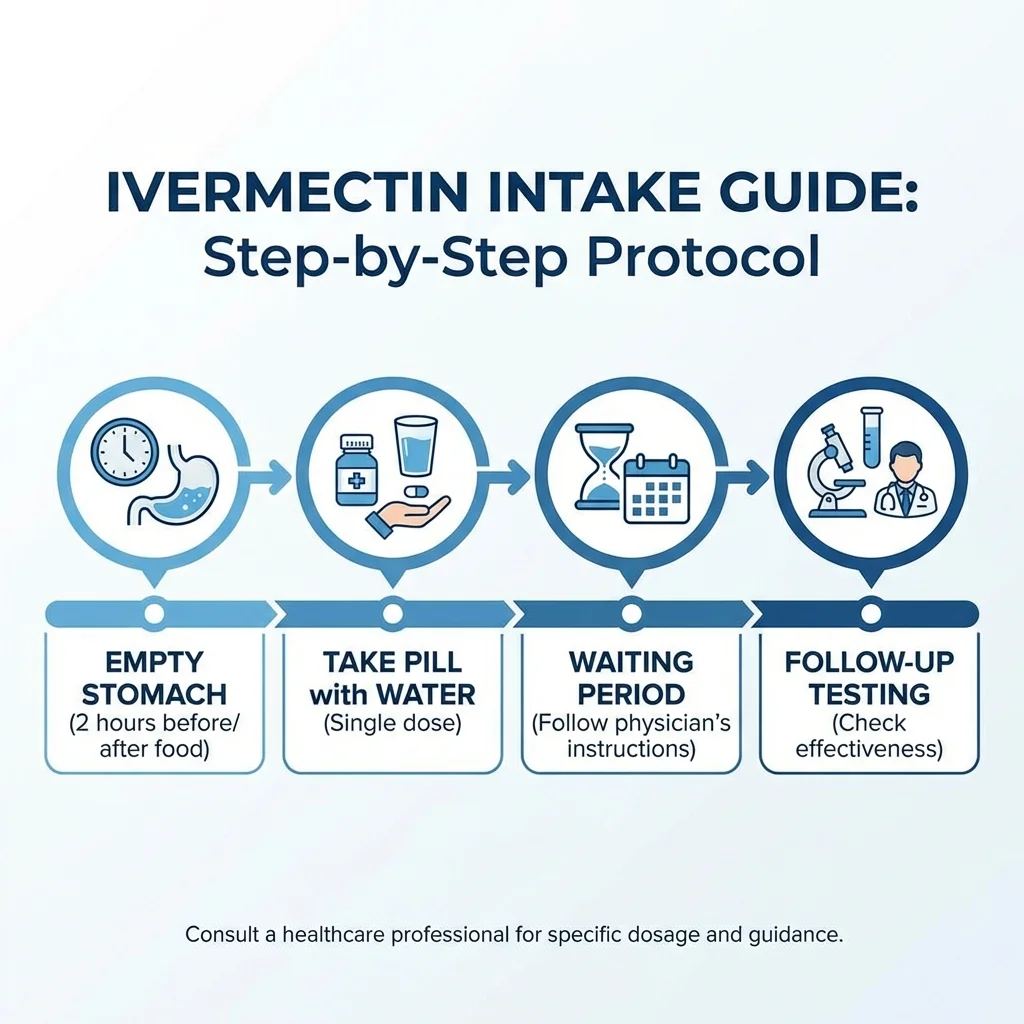
Timing and Administration
Best Practices:
- Take on an empty stomach with a full glass of water
- Timing: 1 hour before or 2 hours after meals
- Morning dose: Usually recommended for convenience
- Single dose: Most conditions require only one dose initially
Why empty stomach matters:
- Maximizes absorption
- Ensures consistent blood levels
- Reduces variability in effectiveness
Food Interactions
Avoid these around dosing time:
- Heavy meals (especially high-fat foods)
- Dairy products
- Grapefruit juice (may increase ivermectin levels)
Note: For scabies treatment, some clinicians may recommend taking with food to increase bioavailability. Follow your doctor's specific instructions.
Condition-Specific Dosing Guidelines
Strongyloidiasis
Standard Protocol:
- Single oral dose of 200 µg/kg
- Take on empty stomach
- Follow-up stool examinations at 2-4 weeks
Immunocompromised Patients:
- May require repeated dosing every 2 weeks
- Some cases need monthly suppressive therapy
- Close monitoring essential
Onchocerciasis (River Blindness)
Treatment Schedule:
- Single annual dose of 150 µg/kg
- May require treatment for 10-15 years
- Part of mass drug administration programs in endemic areas
Mazzotti Reaction:
- Common side effects from dying parasites
- Usually mild to moderate
- May include fever, itching, swollen lymph nodes
- See our ivermectin side effects guide for details
Scabies (Off-Label)
Typical Protocol:
- Initial dose: 200 µg/kg
- Repeat dose: After 1-2 weeks
- May combine with topical permethrin
Crusted Scabies:
- Multiple doses may be needed
- Days 1, 2, 8, 9, and 15
- Combined with topical treatments essential
Special Populations
Pediatric Dosing
Age/Weight Requirements:
- Minimum weight: 15 kg (33 lbs)
- Minimum age: Generally not recommended under 6 months for topical; oral use typically for children greater than or equal to 5 years
Pediatric Considerations:
- Dosing follows same weight-based formula
- Extra caution with very young children
- Monitor closely for side effects
Pregnancy and Breastfeeding
Pregnancy Category C:
- Use only if clearly needed
- Benefits must outweigh risks
- Animal studies show potential adverse effects
Breastfeeding:
- Ivermectin passes into breast milk
- Discuss timing of doses with healthcare provider
- May consider pumping and discarding milk for 24 hours after dose
Elderly Patients
Considerations:
- No specific dose adjustments typically required
- May be more sensitive to side effects
- Monitor for dizziness and confusion
- Check for drug interactions (elderly often take multiple medications)
Hepatic Impairment
Liver Function Considerations:
- Mild to moderate impairment: Usually no adjustment needed
- Severe impairment: Use with caution, may require dose reduction
- Monitor liver function tests
- Ivermectin is metabolized by the liver (CYP3A4)
Renal Impairment
Kidney Function:
- Less than 1% excreted unchanged in urine
- No specific dose adjustments typically required
- Safe in chronic kidney disease
- Dialysis patients: Standard dosing usually appropriate
What to Avoid While Taking Ivermectin
Drug Interactions
Medications that May Increase Ivermectin Levels:
- CYP3A4 Inhibitors: Ketoconazole, itraconazole, erythromycin
- P-glycoprotein Inhibitors: Cyclosporine, verapamil
- Risk: Increased side effects and toxicity
Medications Affected by Ivermectin:
- Warfarin: May increase bleeding risk (monitor INR)
- Digoxin: May increase serum levels
- Monitor closely if taking these medications
Alcohol
Recommendation:
- Avoid alcohol during ivermectin treatment
- Alcohol may enhance sedative effects
- Can increase risk of dizziness and confusion
Learn more about potential side effects and safety concerns.
Missed Dose Guidelines
If you miss a dose:
- For single-dose treatments: Contact your healthcare provider
- Do NOT double the dose
- Follow-up may be needed to assess effectiveness
For repeat-dose protocols:
- Take as soon as remembered if within 12 hours
- If more than 12 hours late, skip and continue with schedule
- Always inform your doctor of missed doses
Overdose Information
Signs of Overdose
Symptoms may include:
- Severe dizziness or loss of consciousness
- Extreme drowsiness
- Vision changes
- Tremors or seizures
- Severe confusion
- Difficulty breathing
- Rapid heart rate
Action Required:
- Call 911 or Poison Control immediately (1-800-222-1222)
- Do NOT wait for symptoms to worsen
- Have medication bottle ready for reference
Prevention
- Store safely out of reach of children
- Never take veterinary formulations (highly concentrated)
- Follow prescribed dose exactly
- Don't adjust dose without consulting doctor
Storage and Handling
Proper Storage:
- Room temperature (68-77°F / 20-25°C)
- Keep in original container
- Protect from light and moisture
- Keep out of reach of children
Expiration:
- Check expiration date before use
- Do not use expired medication
- Dispose of properly (pharmacy take-back programs)
Frequently Asked Questions
Can I split or crush ivermectin tablets?
Ivermectin tablets can be split if scored, but should not be crushed unless directed by your healthcare provider. Crushing may affect absorption and effectiveness.
How long does it take to work?
- Symptom improvement: Often within 48-72 hours
- Complete parasite elimination: May take 1-2 weeks
- Follow-up testing: Typically 2-4 weeks after treatment
How often can I take ivermectin?
This depends entirely on your condition:
- Strongyloidiasis: Usually single dose
- Onchocerciasis: Annually
- Scabies: May repeat after 1-2 weeks
Never take more frequently than prescribed.
Is a higher dose more effective?
No. Taking more than prescribed:
- Does NOT improve effectiveness
- Significantly increases risk of side effects
- May cause serious toxicity
Always follow prescribed dosing exactly.
When to Contact Your Doctor
Call your healthcare provider if:
- Symptoms don't improve after treatment
- New symptoms develop
- You experience severe side effects
- You're unsure about dosing
- You missed a dose in a multi-dose protocol
Related Resources
- What is Ivermectin Used For? - Complete guide to medical applications
- Ivermectin Side Effects - Full safety profile
- Comprehensive Ivermectin Guide - Everything you need to know
Medical Disclaimer
[!CAUTION] This dosing guide is for educational purposes only and is not a substitute for professional medical advice. Ivermectin should only be taken under medical supervision with a valid prescription. Dosing may vary based on individual factors and specific clinical situations. Always follow your healthcare provider's instructions exactly.
References
- FDA. (2024). Stromect label Information. U.S. Food and Drug Administration.
- Merck. (2026). Stromectol (Ivermectin) Prescribing Information.
- Drugs.com. (2026). Ivermectin Dosing Guidelines.
- Medscape. (2026). Ivermectin Dosing, Indications, Interactions.
- Mayo Clinic. (2026). Ivermectin Oral Route: Proper Use.
Last Updated: January 17, 2026
Author: Dr. Sarah Chen, MD - Board-certified Infectious Disease Specialist
Reviewed By: Medical Editorial Team